Erik Schmidt · 20 October 2026
Leafwood Canopy Soundscapes Offer New Data on Nocturnal Species Behavior Patterns
Leafwood forests have drawn increasing attention from ecologists who deploy networks of acoustic sensors throughout the canopy layers, and these devices capture continuous recordings that researchers analyze to track nocturnal species movements and interactions. In October 2026 field teams released expanded datasets that cover multiple seasons of sound data collected across several leafwood stands in the Pacific Northwest and parts of the northern Rockies.
Acoustic Monitoring Techniques
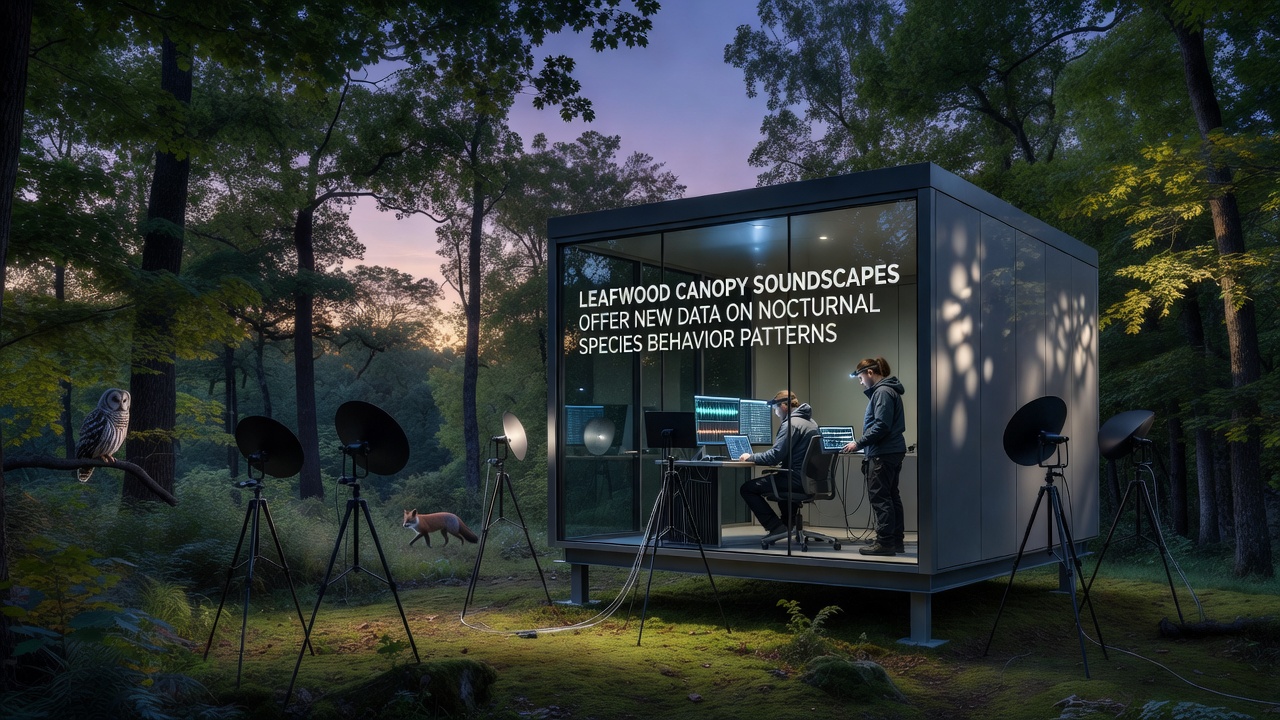
Researchers place compact microphones at varying heights within the canopy to sample frequencies from low rumbles of large mammals to high-pitched calls of bats and insects, while automated software filters out wind and rain noise before pattern recognition algorithms identify species-specific vocalizations. The approach allows continuous observation across entire nights rather than relying on sporadic visual sightings or trap captures that often miss subtle behavioral shifts.
Equipment operates on solar-recharged batteries and transmits compressed files via low-power radio links to base stations, and this setup has enabled longer deployment periods without frequent site visits that might disturb the animals under study. Data processing pipelines now incorporate machine learning models trained on verified call libraries, which improves detection accuracy for species whose vocal signatures overlap in time and frequency.
Behavior Patterns Revealed by Sound Data
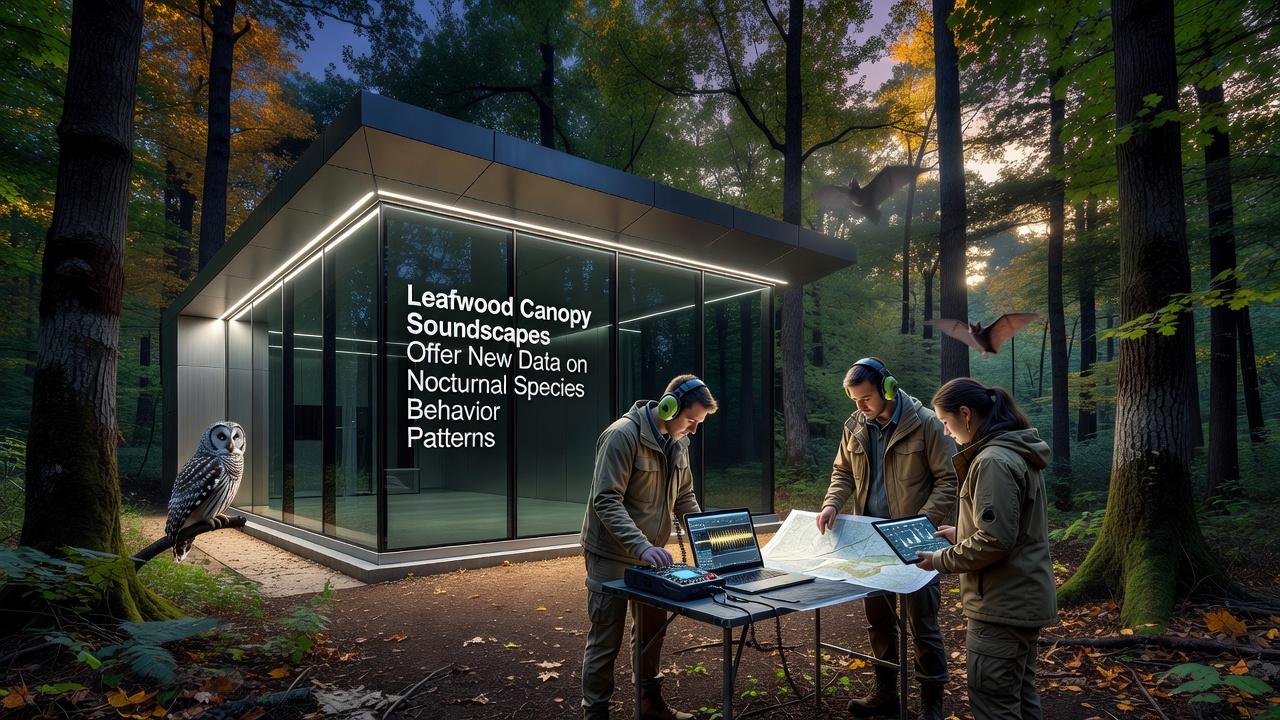
Analysis of the October 2026 release shows that several bat species shift their foraging routes earlier in the evening during periods of higher insect density, while certain owl populations extend their calling bouts later into the night when rodent activity peaks near forest edges. These temporal adjustments appear linked to lunar cycles and temperature gradients recorded alongside the audio streams.
Small mammals such as flying squirrels produce distinct alarm calls that coincide with predator passes detected in the same recordings, and the timing of these exchanges helps map predator-prey dynamics across different canopy strata. Insect choruses, particularly from nocturnal beetles and crickets, demonstrate synchronized peaks that researchers correlate with humidity levels measured at sensor locations.
Regional Comparisons and Data Integration
Soundscape profiles differ between younger regrowth stands and older leafwood groves where structural complexity supports greater acoustic diversity, and cross-site comparisons highlight how canopy density influences sound propagation and species detection rates. Teams combine these audio records with GPS-tagged movement data from a subset of animals to validate spatial patterns inferred from call locations alone.
According to findings shared through the USGS Northern Prairie Wildlife Research Center, integrated acoustic and environmental datasets now support refined models of habitat use that account for vertical stratification within the canopy. Parallel work in comparable forest types has drawn on reports from the Australian Department of Climate Change, Energy, the Environment and Water that document similar monitoring frameworks applied to eucalypt woodlands.
Seasonal and Environmental Influences
Recordings from late summer into early fall reveal extended activity windows for certain migratory species that pass through leafwood areas, whereas winter datasets show reduced overall vocal activity punctuated by brief surges during mild weather spells. Precipitation events temporarily suppress many calling behaviors yet trigger increased movement sounds from amphibians near ephemeral pools formed at ground level.
Wind patterns affect how far individual calls travel through the canopy, and researchers adjust detection thresholds accordingly when comparing sites with different exposure levels. These adjustments help isolate true behavioral changes from artifacts introduced by varying acoustic conditions across the monitoring network.
Future Applications of Canopy Soundscape Data
Expanded sensor grids planned for 2027 aim to increase spatial resolution and add real-time alert functions for unusual activity spikes that might indicate disease outbreaks or sudden habitat disturbances. The accumulating archives also serve as baseline references against which future changes in nocturnal community composition can be measured.
Conclusion
Leafwood canopy soundscapes continue to supply detailed records of nocturnal species activity that complement traditional survey methods, and the October 2026 data release demonstrates how sustained acoustic monitoring yields insights into timing, location, and environmental drivers of animal behavior across multiple forest sites. Ongoing refinements in sensor technology and analysis tools are expected to strengthen these contributions to forest ecology studies.