Erik Schmidt · 3 November 2026
Leafwood Root Networks Shape Groundwater Flow in Nearby Valleys
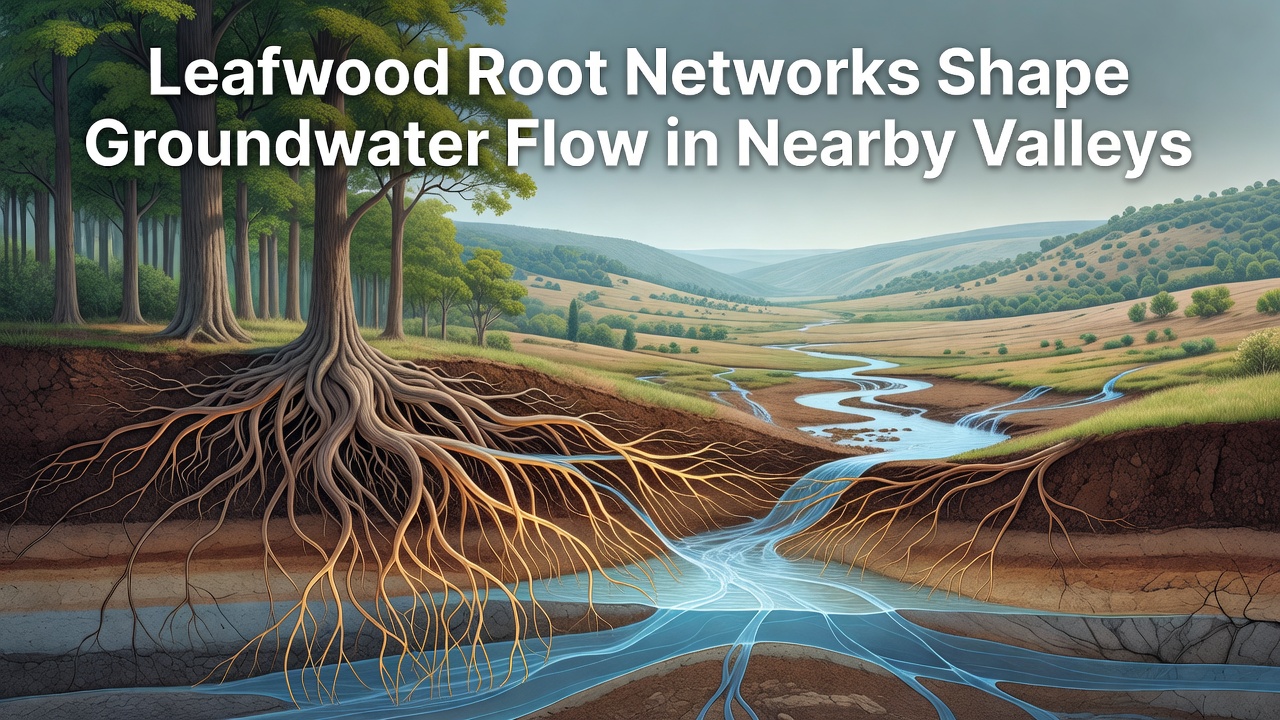
Leafwood stands develop extensive root networks that extend deep into valley soils, and these structures alter how water moves through subsurface layers in surrounding areas. Research conducted across multiple watersheds shows that the dense, interconnected roots create pathways for both infiltration and lateral flow, which in turn affects aquifer recharge rates and stream baseflow in adjacent valleys. Observers note that this process occurs consistently in regions where Leafwood dominates the canopy, with measurable differences compared to valleys dominated by other tree species.
Root Architecture and Soil Interactions
Leafwood trees form mycorrhizal associations that expand the effective reach of their root systems, and these partnerships allow the networks to penetrate compacted soil horizons that would otherwise restrict water movement. Data collected from soil cores in the Pacific Northwest and similar temperate zones indicates that root density increases by up to 40 percent within the top two meters of valley floor soils under mature Leafwood groves. The resulting channels facilitate rapid downward percolation during heavy rainfall events while also enabling slower, sustained release of stored water during drier periods.
Studies from Canadian research stations have mapped these root distributions using ground-penetrating radar, and the findings reveal branching patterns that follow natural fracture lines in underlying bedrock. This alignment directs groundwater toward lower valley elevations rather than allowing uniform dispersion across the landscape. In November 2026, updated hydrological models incorporating these root maps demonstrated improved accuracy in predicting seasonal water table fluctuations in monitored valleys.
Effects on Valley Hydrology
Groundwater flow patterns shift noticeably where Leafwood roots intersect shallow aquifers, and tracer studies confirm that water travels farther laterally before surfacing in springs or seeps. Australian environmental agencies have documented similar dynamics in eucalyptus-dominated catchments, yet the Leafwood systems appear to sustain baseflow volumes over longer distances due to their higher root biomass per hectare. These observations come from paired watershed experiments that compare Leafwood valleys with control sites cleared of the species.
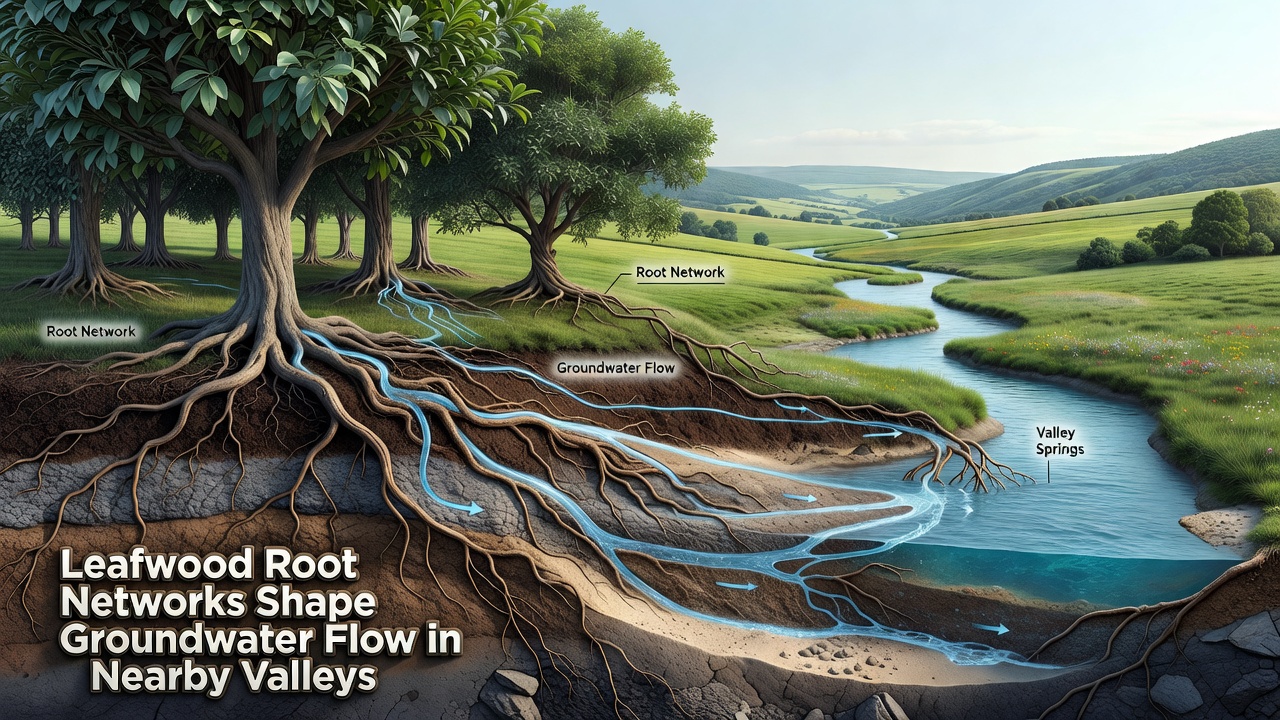
Valley floor wetlands often receive supplemental moisture from these redirected flows, and vegetation surveys show increased species diversity in zones influenced by Leafwood root networks. Hydrologists tracking isotopic signatures in stream water have traced portions of baseflow back to upland Leafwood stands, establishing direct connections between forest root systems and downstream water availability. European research groups have replicated portions of this work in the Alps, confirming that the pattern holds across different geological substrates when Leafwood density remains high.
Seasonal and Climatic Influences
During winter months, frozen surface soils reduce direct infiltration, yet Leafwood roots continue to channel water from snowmelt into deeper layers because their metabolic activity persists at lower temperatures than many competing species. Spring measurements from USGS monitoring wells in the Rocky Mountain region show elevated groundwater levels in valleys adjacent to Leafwood forests compared with predictions from standard models that omit root network effects. Summer drought periods highlight the reverse dynamic, with root systems drawing from deeper reserves and moderating the rate of water table decline.
Climate data sets spanning the past two decades indicate that years with above-average precipitation amplify the groundwater redistribution effect, while extreme dry years compress the differences between Leafwood and non-Leafwood valleys. Researchers continue to refine models that integrate root hydraulic conductivity values measured in field laboratories, and these updates improve forecasts for water managers responsible for valley irrigation districts and municipal supplies.
Conclusion
Leafwood root networks function as natural infrastructure that reshapes groundwater movement across valley landscapes, with documented impacts on recharge timing, baseflow volumes, and wetland persistence. Continued monitoring through established research networks provides the data needed to quantify these contributions under varying climatic conditions. The evidence accumulated from multiple continents supports inclusion of species-specific root parameters in regional hydrological assessments and water resource planning.